**Reviewed: **
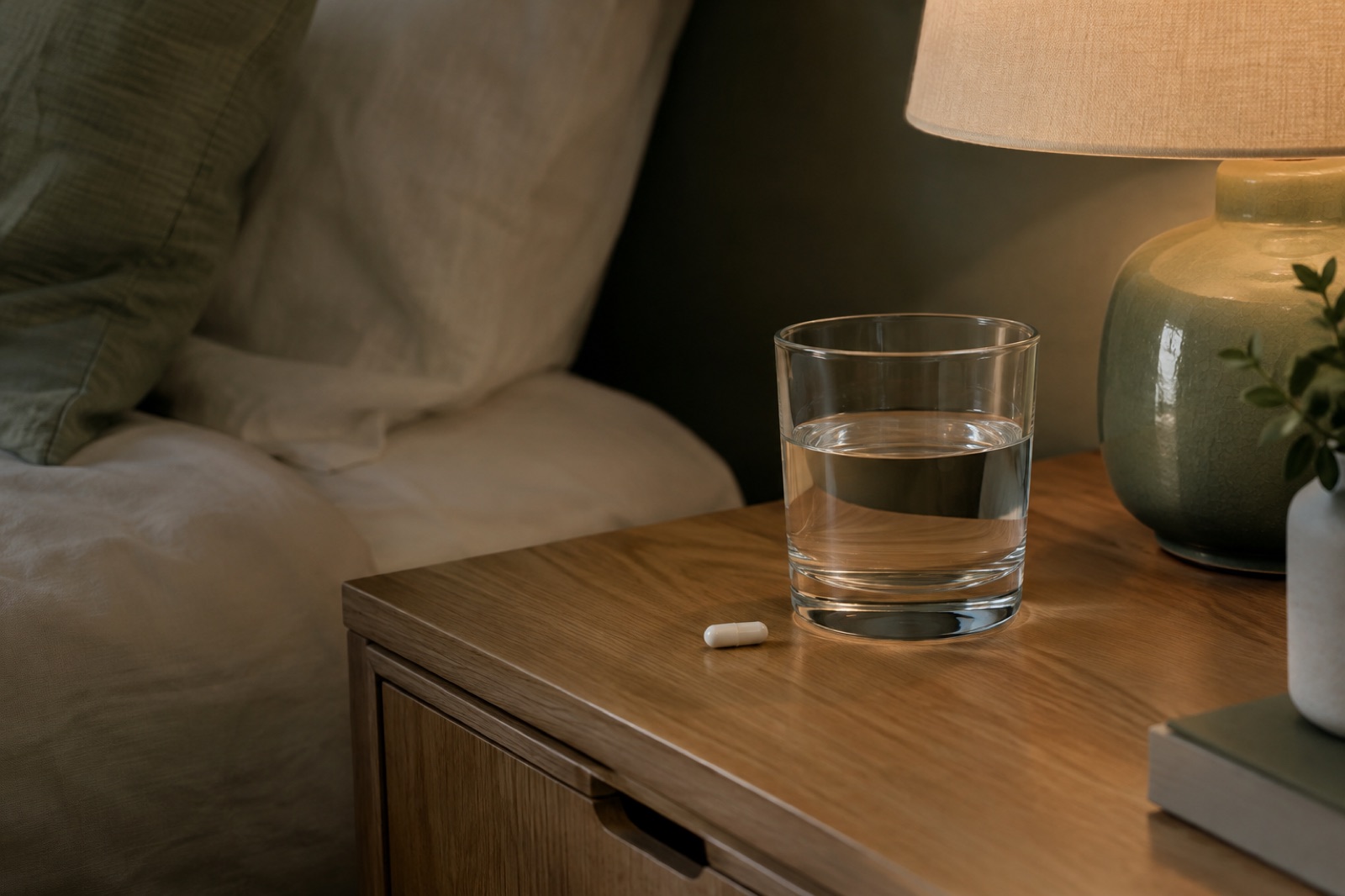
Oral DHEA is not usually taken at night. No established evidence shows that bedtime improves the benefits of oral DHEA, and nighttime dosing can worsen sleep for some people. One small study of 7 postmenopausal women found mixed sleep effects after participants took 50 mg of DHEA at 11 p.m.
If your prescriber has not specified a schedule, taking oral DHEA in the morning or early afternoon is a practical default. This does not mean morning dosing is medically superior. It reduces the chance that possible stimulation or insomnia will interfere with sleep.
Vaginal prasterone is different. The official label for Intrarosa, a prescription form of vaginal DHEA, instructs patients to use one vaginal insert once daily at bedtime.
Oral DHEA Versus Vaginal Prasterone
| Product | Should it be used at night? | Why |
|---|---|---|
| Oral DHEA supplement | Not routinely | Bedtime has no proven general advantage, and insomnia is a possible side effect |
| Prescription vaginal prasterone, such as Intrarosa | Yes, if prescribed | The official dosing instructions specify once daily at bedtime |
| Compounded DHEA cream or capsule | Follow the prescriber's instructions | Strength, absorption and intended use vary between products |
Why Do Some People Take Oral DHEA at Night?
Some people take oral DHEA at night because it makes them feel tired, fits their medication routine or follows a healthcare professional's instructions.
DHEA affects people differently. The body can convert DHEA into testosterone and estrogen, so its effects may include stimulation or sleep disruption. In the small study of 7 postmenopausal women, sleep improved for some participants and worsened for others. The differences appeared to relate partly to how each person converted DHEA into testosterone and estradiol.
That variability makes nighttime DHEA an unreliable sleep strategy.
Can Taking DHEA at Night Cause Insomnia?
Yes. Oral DHEA may cause insomnia, restlessness or mood changes in some users. Mayo Clinic lists insomnia among possible problems associated with DHEA, particularly when DHEA is combined with estrogen. Other possible effects include acne, oily skin, unwanted facial hair in women and other androgen-related changes.
If you notice any of the following after taking DHEA at night, ask a healthcare professional whether taking it earlier would be appropriate:
- Difficulty falling asleep
- Waking during the night
- Feeling unusually alert or restless
- Irritability, anxiety or an unusually elevated mood
- New acne or increased facial hair
- Headache or nausea
Do not change the dose simply to correct a timing problem.
When Is Taking DHEA at Night Appropriate?
Nighttime dosing may be appropriate when:
- You use prescription vaginal prasterone. Intrarosa is labeled for bedtime use.
- Your prescriber told you to take oral or compounded DHEA at night.
- DHEA makes you sleepy, and it does not worsen your sleep or cause other side effects.
- Bedtime is the only schedule you can follow consistently, and your healthcare professional agrees.
A consistent schedule helps you follow treatment, but consistency does not make an unsuitable dose safe. DHEA is a hormone, not a general sleep supplement.
What Is the Best Time to Take Oral DHEA?
If you take an oral DHEA supplement and have no specific instructions, morning or early afternoon is a practical starting point. Morning dosing has not been proven more effective. Taking DHEA earlier simply avoids placing a potentially stimulating hormone close to bedtime.
This recommendation is an inference based on reported insomnia risk and the variable sleep effects of DHEA.
Take DHEA at the same time each day and follow the product label or prescription instructions. The label is where the serving size and any timing guidance appear, and DHEA supplement products online show that information on the listing before you buy.
Who Should Ask a Healthcare Professional Before Using DHEA?
Speak with a healthcare professional before taking DHEA if you:
- Are pregnant, trying to become pregnant or breastfeeding
- Have a history of breast, ovarian, uterine or prostate cancer
- Have a mood disorder, especially bipolar disorder or a history of mania
- Have heart disease, high cholesterol or prostate problems
- Take estrogen, testosterone, antidepressants, sedatives or other hormone-related medicines
- Are using DHEA for fatigue, aging, low libido or "low hormones" without a confirmed diagnosis
DHEA supplements have not been reliably shown to provide general anti-aging benefits, and supplement quality can vary. Tell your clinician that you take DHEA because it can affect hormone interpretation and laboratory testing.
Bottom Line
Use oral DHEA at night only when your prescriber recommends it or your own response makes that schedule suitable. If nighttime DHEA interferes with sleep, ask a healthcare professional whether the timing, dose or treatment plan should change. Use prescription vaginal prasterone at bedtime because its official instructions specify nighttime use.