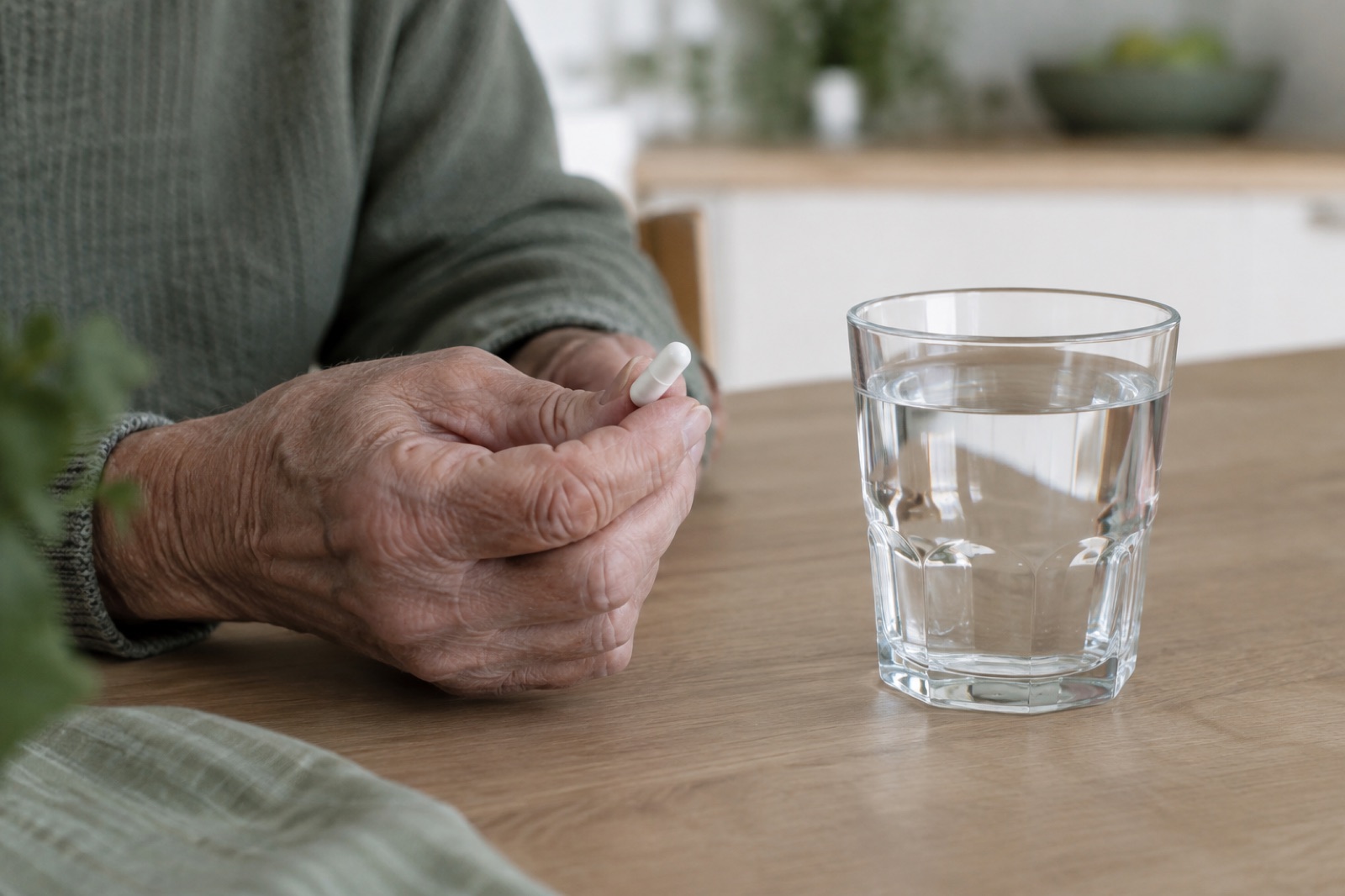
For a healthy 50-year-old man, there is no established age-based DHEA dose. The safest default is 0 mg unless a healthcare professional has identified a specific reason to use DHEA and is monitoring treatment.
DHEA is not a routine treatment for low energy, aging, muscle gain, erectile dysfunction, or low testosterone. Research has not shown consistent benefits for these uses. DHEA can also increase androgen and estrogen activity in the body.
DHEA Dosage at a Glance
| Situation | Appropriate approach |
|---|---|
| Healthy 50-year-old man | Do not routinely take DHEA |
| Low energy or low libido | Investigate possible causes before considering DHEA |
| Suspected low DHEA-S | Confirm the result with a blood test and medical evaluation |
| Low testosterone | Test testosterone properly. DHEA is not a substitute for testosterone treatment |
| Adrenal disease | Follow treatment directed by an endocrinologist |
| Anti-aging or muscle gain | Do not self-treat with DHEA |
If a Doctor Recommends DHEA, What Dose Is Commonly Studied?
Clinical studies in older men have used 50 to 100 mg daily. One study used 75 mg daily in men aged 60 and older. Another study involved male weightlifters with an average age of 48. Participants took 100 mg daily, but DHEA did not meaningfully improve strength, lean body mass, aerobic capacity, or testosterone compared with placebo.
These amounts describe research protocols. They are not instructions for self-treatment.
A clinician may choose a lower dose, a different dose, or no treatment at all after reviewing your DHEA-S level, testosterone results, symptoms, medical history, medications, and treatment goal. There is no universally accepted DHEA dose for all 50-year-old men. Retail strengths often differ from those used in studies, and you can check the per-capsule dose on DHEA supplements available to buy before discussing any dose with a clinician.
Should a 50-Year-Old Man Take DHEA for Low Testosterone?
Usually, no. DHEA is a precursor hormone. The body can convert it into testosterone, estrogen, and other steroid hormones, but taking DHEA does not reliably raise testosterone or improve related symptoms in men.
A low testosterone diagnosis requires appropriate testing and an assessment of symptoms. Age alone is not enough to determine whether treatment is needed.
If low testosterone is a concern, ask a healthcare professional about morning total testosterone testing. Depending on the result, follow-up tests may include:
- Free testosterone
- Sex hormone-binding globulin
- Luteinizing hormone
- Prolactin
- DHEA-S
What Should Be Checked Before Using DHEA?
A clinician may review:
- DHEA-S, using the laboratory's age- and sex-specific reference range
- Morning total testosterone and, when appropriate, free testosterone
- Prostate history and prostate-specific antigen testing when clinically indicated
- Cholesterol levels, particularly HDL cholesterol
- Liver health and possible medication interactions
- A history of prostate cancer or another hormone-sensitive cancer
- Mood disorders, particularly bipolar disorder or previous mania
For men aged 50 to 59, an Endocrine Society reference table lists an approximate male DHEA-S range of 35 to 179 micrograms per deciliter. Laboratory ranges differ, so results should be interpreted using the range provided by the testing laboratory. A low DHEA-S result does not automatically mean that DHEA supplementation is appropriate.
Who Should Avoid DHEA Unless a Doctor Approves It?
Medical supervision is especially important if you have:
- Prostate cancer, breast cancer, or another hormone-sensitive cancer
- Significant prostate enlargement or unexplained prostate symptoms
- High cholesterol or ischemic heart disease
- Bipolar disorder, mania, or another mood disorder
- An endocrine or adrenal disorder
- Current testosterone or estrogen treatment
- Medicines that may interact with DHEA
Possible side effects include acne, oily skin, mood changes, reduced HDL cholesterol, and unwanted changes in androgen or estrogen levels. Long-term safety is still uncertain. Mayo Clinic advises avoiding DHEA because evidence for anti-aging benefits is weak and side effects are possible.
Bottom Line
A 50-year-old man should not choose a DHEA dose based on age alone. For anti-aging, energy, muscle, or testosterone purposes, the recommended self-treatment dose is 0 mg.
If testing shows an abnormal DHEA-S level or an endocrine condition is suspected, a physician should decide whether DHEA is appropriate and monitor the response. If you want to see what retail products contain before that appointment, this is a widely stocked DHEA supplement, with its per-capsule dose printed on the label.