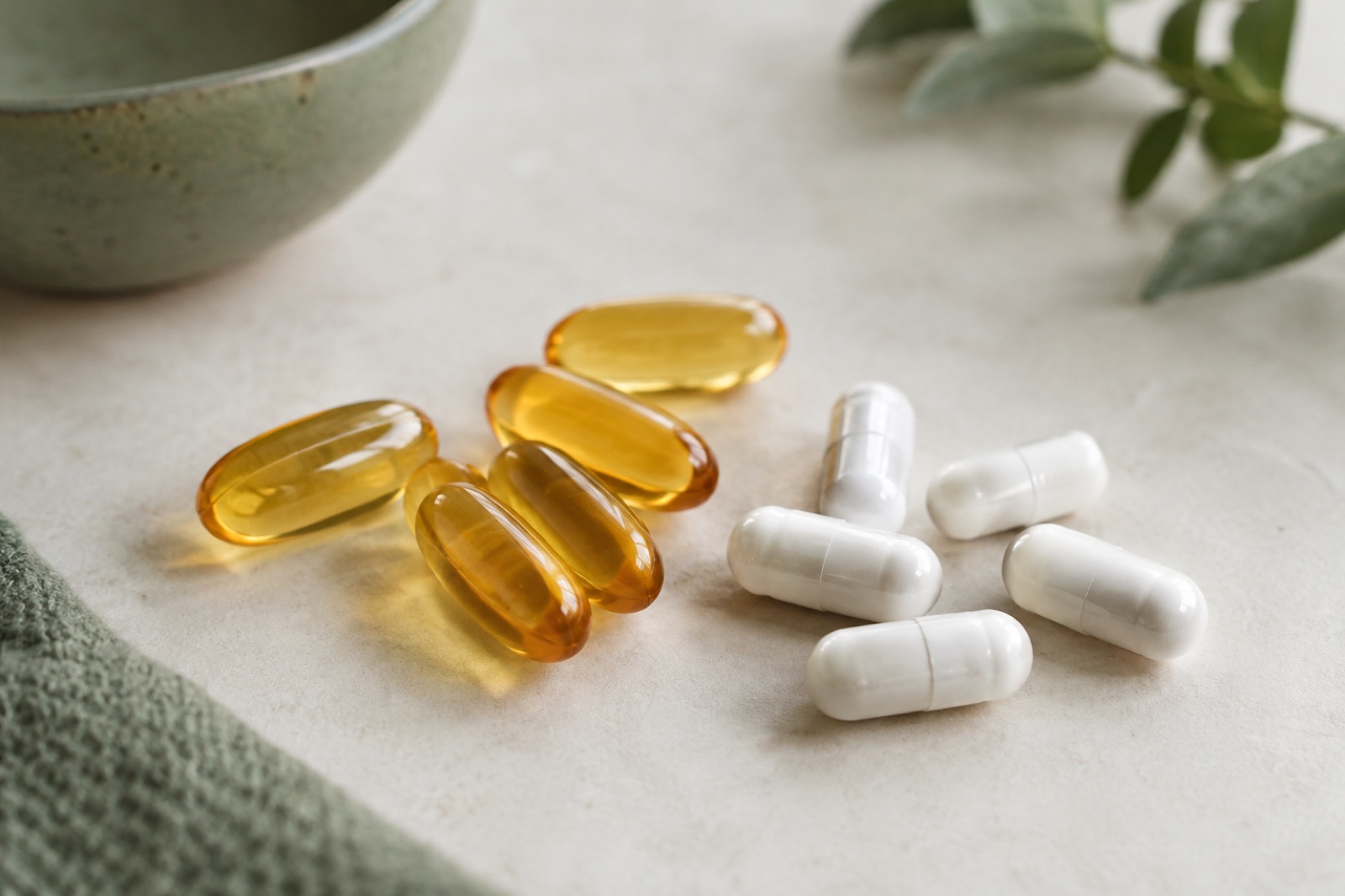
DHA and DHEA are different substances. They differ by 1 letter in the abbreviation, but they belong to different biological categories.
- DHA means docosahexaenoic acid, an omega-3 fatty acid found in fish, fish oil and algae-based supplements.
- DHEA means dehydroepiandrosterone, a steroid hormone produced mainly by the adrenal glands.
DHA cannot replace DHEA, and DHEA does not provide the nutritional benefits associated with DHA.
DHA and DHEA Compared
| Feature | DHA | DHEA |
|---|---|---|
| Full name | Docosahexaenoic acid | Dehydroepiandrosterone |
| Substance type | Omega-3 polyunsaturated fatty acid | Steroid hormone and hormone precursor |
| Main sources | Fatty fish, fish oil, algae oil and fortified foods | Produced naturally by the adrenal glands; also sold as a supplement |
| Main biological role | Supports cell membranes, with high concentrations in the brain and retina | Can be converted into androgen and estrogen hormones |
| Common label or test context | Prenatal vitamins, fish oil and omega-3 supplements | Hormone tests, DHEA supplements and DHEA-S blood tests |
NIH identifies DHA as one of the primary long-chain omega-3 fatty acids. MedlinePlus identifies DHEA as a hormone made mainly by the adrenal glands.
What Is DHA?
DHA is docosahexaenoic acid, an omega-3 fatty acid.
DHA occurs naturally in fatty fish and seafood. It is also available in fish oil, algae oil and fortified foods. The body contains high levels of DHA in the brain, retina and sperm cells.
You may see "DHA" on:
- Fish oil and omega-3 supplements
- Prenatal vitamins
- Infant formula
- Algae oil supplements
- Foods fortified with omega-3 fatty acids
DHA is often listed with EPA, another omega-3 fatty acid. Both are nutrients, not adrenal hormones.
What Is DHEA?
DHEA is dehydroepiandrosterone, a steroid hormone produced mainly by the adrenal glands.
The body can convert DHEA into other hormones, including androgens and estrogens. DHEA is present in both men and women, and blood levels generally decline with age. Unlike fish oil, it is also sold as a hormone product: these are DHEA supplement options on Amazon, labelled in milligrams of the hormone per capsule.
You may see "DHEA" in connection with:
- Hormone testing
- Adrenal gland evaluations
- Fertility-related supplements
- Menopause products
- Hormone and aging-related claims
DHEA is sometimes confused with DHEA-S, or dehydroepiandrosterone sulfate. DHEA-S is a sulfated form of DHEA that is measured in blood tests. It is not the same substance as DHA.
Why Are DHA and DHEA Confused?
The abbreviations are similar, but the substances have different roles:
- DHA is a dietary fat.
- DHEA is a hormone.
- DHEA-S is a sulfated form of DHEA.
- EPA is another omega-3 fatty acid commonly listed with DHA.
Check the full name on a supplement label or laboratory report. The abbreviation alone may be easy to misread.
Can You Take DHA Instead of DHEA?
No. DHA cannot replace DHEA.
DHA supplies an omega-3 fatty acid. DHEA affects hormone pathways and may be converted into sex hormones. Fish oil or algae oil will not raise DHEA levels in the way a DHEA product is intended to do. The difference is visible on the labels: DHEA capsules available online state a milligram amount of the hormone, while a fish oil label lists EPA and DHA.
The reverse is also true: DHEA does not provide omega-3 fatty acids or the nutritional role associated with DHA.
Is DHEA Safe to Take?
DHEA should not be treated like an ordinary vitamin or fish oil supplement. Since the body can convert DHEA into other hormones, supplementation may cause side effects and may not be suitable for people with hormone-sensitive conditions.
MedlinePlus states that reliable evidence does not support DHEA supplements for anti-aging. NCCIH notes that the long-term safety of DHEA supplements is unknown.
If a clinician has recommended DHEA, or you are considering it for fertility, menopause, energy or aging, discuss the dose and possible risks with a healthcare professional.
Bottom Line
Check the full chemical name before buying a supplement or interpreting a test result. DHA is docosahexaenoic acid, while DHEA is dehydroepiandrosterone.