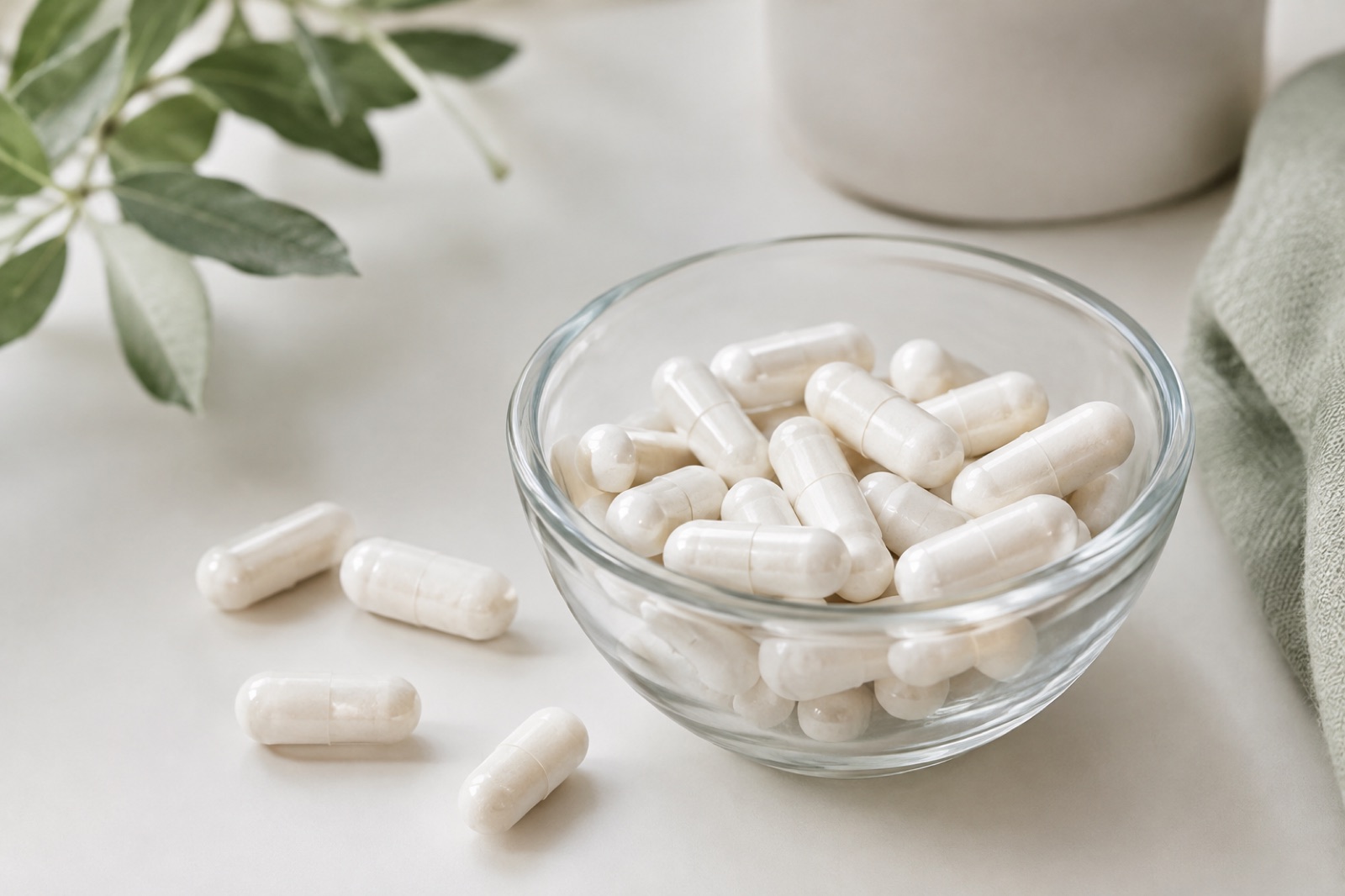
DHEA is a naturally occurring steroid hormone produced mainly by the adrenal glands. Two related terms matter here: DHEA and DHEA-S.
DHEA at a Glance
| Question | Answer |
|---|---|
| Is DHEA a hormone? | Yes |
| Full name | Dehydroepiandrosterone |
| Hormone type | Steroid hormone and adrenal androgen precursor |
| Main source | Adrenal cortex |
| Related hormone | DHEA sulfate, or DHEA-S |
| Main function | Provides material the body can use to produce testosterone and estrogen |
What Does DHEA Do in the Body?
DHEA acts partly as a precursor hormone, also called a prohormone. The body can convert it into other sex hormones in certain tissues.
DHEA can contribute to the production of:
- Testosterone
- Estrogen
- Androstenedione
DHEA is not the same as testosterone or estrogen. It is an upstream hormone that the body can use to produce them.
What Is the Difference Between DHEA and DHEA-S?
DHEA-S is the sulfate form of DHEA. The body readily converts DHEA into DHEA-S, which is a major circulating form of this adrenal hormone. Blood tests often measure DHEA-S.
DHEA and DHEA-S are different laboratory measurements. A clinician interprets DHEA-S results alongside a person's age, sex, symptoms, medical history and other test results.
Where Is DHEA Produced?
The adrenal cortex produces most circulating DHEA and DHEA-S. The adrenal glands sit above the kidneys and produce several steroid hormones, including cortisol, aldosterone and adrenal androgens.
DHEA levels generally change with age. An unusually high or low DHEA-S level can provide a clue about an adrenal or other hormone-related condition, but one result cannot establish a diagnosis.
Why Might a Doctor Order a DHEA-S Test?
A DHEA-S blood test may help investigate abnormal adrenal or sex-hormone production. A doctor might order it when someone has:
- Excess facial or body hair
- Irregular menstrual periods
- Early puberty
- Acne or other signs of androgen excess
- Possible adrenal disease
- Possible polycystic ovary syndrome
- Possible adrenal insufficiency
High DHEA-S levels can occur with conditions such as polycystic ovary syndrome and, rarely, an adrenal or ovarian tumor. Low levels may occur with Addison disease or problems affecting pituitary hormone production.
Is Taking DHEA the Same as Taking a Regular Vitamin?
No. DHEA supplements are hormone-active products, not ordinary vitamins. The body can convert supplemental DHEA into testosterone and estrogen, which may cause hormonal effects.
Evidence does not reliably support DHEA supplements for anti-aging, and long-term safety remains uncertain. The labelling shows the difference: an Amazon DHEA supplement listing gives a milligram dose of the hormone per capsule rather than a percent daily value.
Discuss DHEA supplements with a healthcare professional, especially if you are pregnant, have a hormone-sensitive condition or take prescription medication.