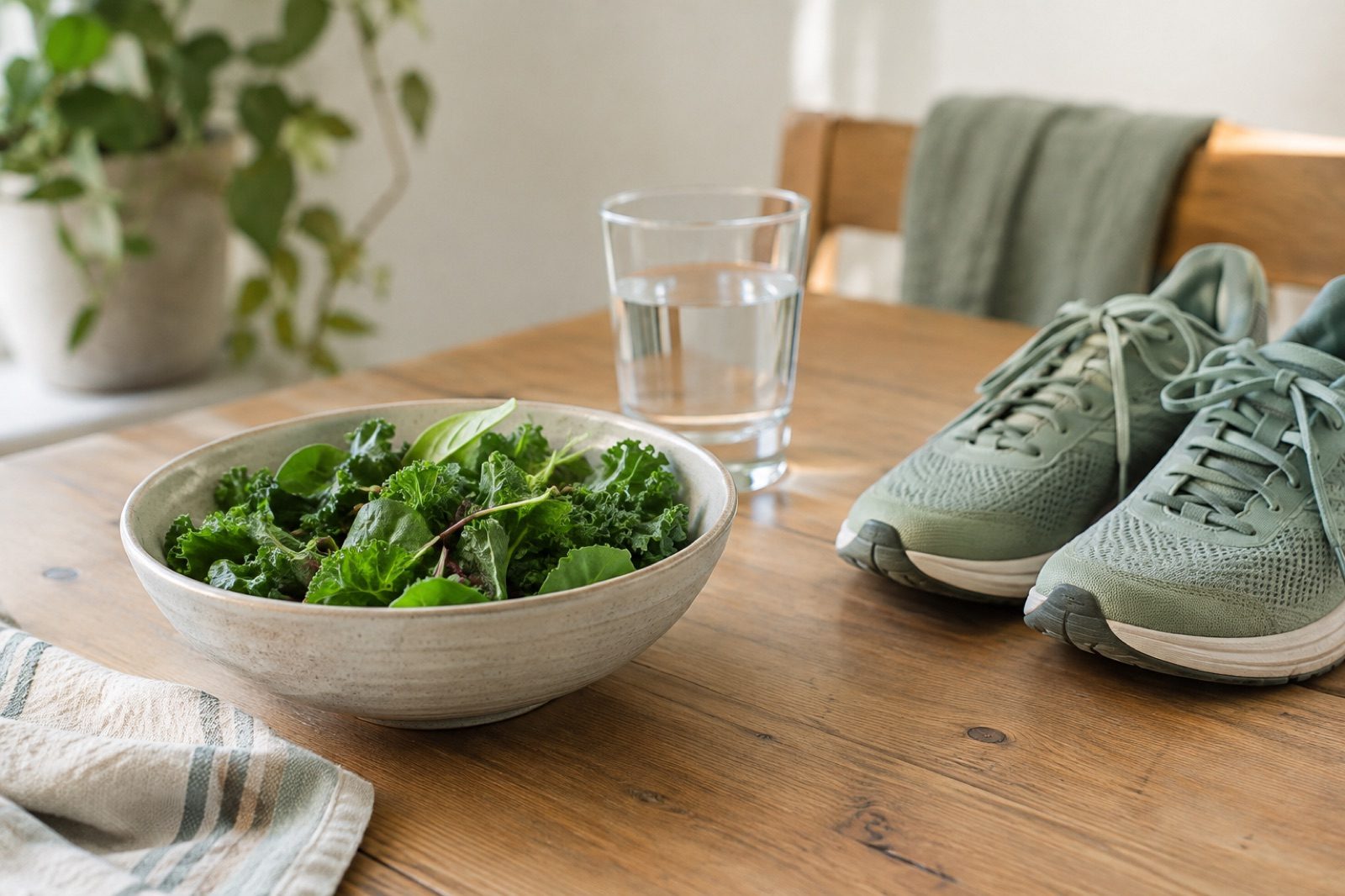
DHEA is an adrenal hormone precursor that no specific food or herb has been proven to raise reliably. The most sensible natural approach is to support normal hormone regulation with regular exercise, adequate sleep, stress management, sufficient nutrition, and medical evaluation when a blood test shows low DHEA-S. This is especially relevant for adults over 40, whose DHEA levels typically decline with age.
Over-the-counter DHEA is not a food supplement. It is a hormone precursor that can affect testosterone, estrogen, cholesterol, mood, skin, and hair. The dose per capsule is stated on the label of commonly purchased DHEA supplements on Amazon, which is useful context before a conversation with a clinician. Do not use it without medical advice.
Natural Ways to Support Healthy DHEA Levels
| Approach | What the evidence suggests | Practical action |
|---|---|---|
| Resistance exercise | May increase DHEA-S in some adults, although results vary | Include regular strength training |
| Aerobic exercise | May support general adrenal and metabolic health | Add moderate cardio |
| Sleep | Poor sleep is linked with changes in adrenal hormones, but more sleep has not been proven to raise DHEA consistently | Keep a regular sleep schedule |
| Stress management | Acute stress can briefly raise DHEA, while chronic stress is harmful | Use therapy, relaxation, breathing exercises, or meditation |
| Diet | No food reliably increases DHEA-S | Eat enough calories and avoid extreme dieting |
| DHEA supplements | Can raise hormone levels but may cause hormone-related side effects | Do not self-prescribe |
1. Do Regular Resistance and Aerobic Exercise
Exercise has the strongest lifestyle support for improving DHEA-S, particularly in adults over 40. A systematic review found that endurance training, high-intensity interval training, and resistance training produced small to large increases in DHEA-S in some studies. The response was inconsistent, however.
A practical routine can include:
- Progressive resistance training for the major muscle groups
- Brisk walking, cycling, swimming, or another form of aerobic activity
- Gradual increases in training volume
- Rest days and enough recovery
Exercise may improve energy, body composition, insulin sensitivity, mood, and cardiovascular health even when DHEA-S does not change measurably.
2. Improve Sleep Quality and Consistency
Sleep affects the hypothalamic-pituitary-adrenal system, which regulates cortisol and other adrenal hormones. Studies have examined links between sleep, cortisol, DHEA, and DHEA-S, but they do not show that sleeping more will reliably raise DHEA.
Focus on:
- Keeping the same bedtime and wake time most days
- Getting enough sleep for your needs
- Seeking help for loud snoring or suspected sleep apnea
- Limiting alcohol near bedtime
- Reducing bright light and stimulating screen use late at night
- Addressing anxiety, depression, pain, or medications that interfere with sleep
Better sleep supports hormone and metabolic health. It is not a guaranteed DHEA treatment.
3. Manage Chronic Stress Without Creating More Stress
DHEA can rise briefly after acute psychological or physical stress. That response does not mean that stressful experiences improve long-term DHEA levels. A systematic review found that DHEA often rises soon after acute stress and then moves back toward baseline.
Do not use sleep deprivation, extreme fasting, overtraining, or deliberate psychological stress to increase DHEA. Instead, consider:
- Cognitive behavioral therapy or counseling
- Mindfulness or meditation
- Slow breathing exercises
- Time outdoors
- Social support
- A reasonable workload with time for recovery
Stress management may help with fatigue and poor sleep even when it does not increase baseline DHEA-S.
4. Eat Enough and Avoid Extreme Dieting
No food has been established as a DHEA booster. Eggs, avocados, wild yam, and "testosterone-boosting" herbs should not be expected to restore low DHEA-S.
Avoid:
- Severe calorie restriction
- Rapid weight-loss diets
- Chronic under-eating
- Excessive alcohol intake
- Unregulated hormone or bodybuilding products
Unexplained weight loss, very low body weight, an eating disorder, or prolonged under-fueling requires medical assessment. A DHEA supplement does not address the underlying problem.
5. Do Not Assume That Low DHEA-S Is Caused by Stress or Aging
DHEA is produced mainly by the adrenal glands. Levels usually peak in early adulthood and gradually decline with age. A DHEA-S blood test can help assess adrenal and sex-hormone-related conditions, but the result must be interpreted alongside your age, sex, symptoms, medications, and the laboratory's reference range.
Low DHEA-S can occur with:
- Primary adrenal insufficiency, including Addison's disease
- Pituitary disorders
- Long-term glucocorticoid use
- Other conditions that affect adrenal function
High DHEA-S can occur with polycystic ovary syndrome, congenital adrenal hyperplasia, or, rarely, an adrenal or ovarian tumor.
Fatigue by itself does not show that DHEA is low. Arrange a medical assessment if you have persistent fatigue, muscle weakness, weight loss, low blood pressure, dizziness when standing, salt cravings, darkening skin, nausea, or reduced libido.
Are DHEA Supplements Safe?
DHEA supplements can increase androgen- and estrogen-related hormones, but they have risks and are not proven anti-aging treatments. Reported concerns include acne, oily skin, unwanted facial hair, reduced HDL cholesterol, mood changes, and possible mania in people with mood disorders. Long-term safety is still uncertain, especially for people with hormone-sensitive conditions.
Avoid non-prescribed DHEA if you are:
- Pregnant or breastfeeding
- Taking estrogen or testosterone
- Managing a hormone-sensitive cancer
- Prone to mania or major mood instability
- Managing certain cardiovascular or cholesterol conditions
- Being treated for PCOS or unexplained androgen excess
The Endocrine Society discusses supervised DHEA replacement only in certain cases. One example is a woman with confirmed primary adrenal insufficiency who continues to have low energy, depressive symptoms, or low libido despite standard adrenal treatment. This is specialist-guided hormone replacement, not a general wellness supplement.
When Low DHEA Requires Urgent Medical Care
Severe vomiting, diarrhea, abdominal pain, dehydration, confusion, very low blood pressure, or fainting can indicate adrenal crisis, particularly in someone with known or suspected adrenal insufficiency. These symptoms require emergency care, not an attempt to increase DHEA naturally.
Bottom Line
Exercise regularly, keep a consistent sleep schedule, manage chronic stress, eat enough, and investigate the reason for an abnormal DHEA-S result. No food or supplement has been proven to safely restore youthful DHEA levels. When DHEA-S is low, addressing an adrenal, pituitary, medication, or other health problem matters more than trying to raise the number yourself. If you still want to see what the over-the-counter option involves, DHEA supplement brands on Amazon list their doses and ingredients on the product page.