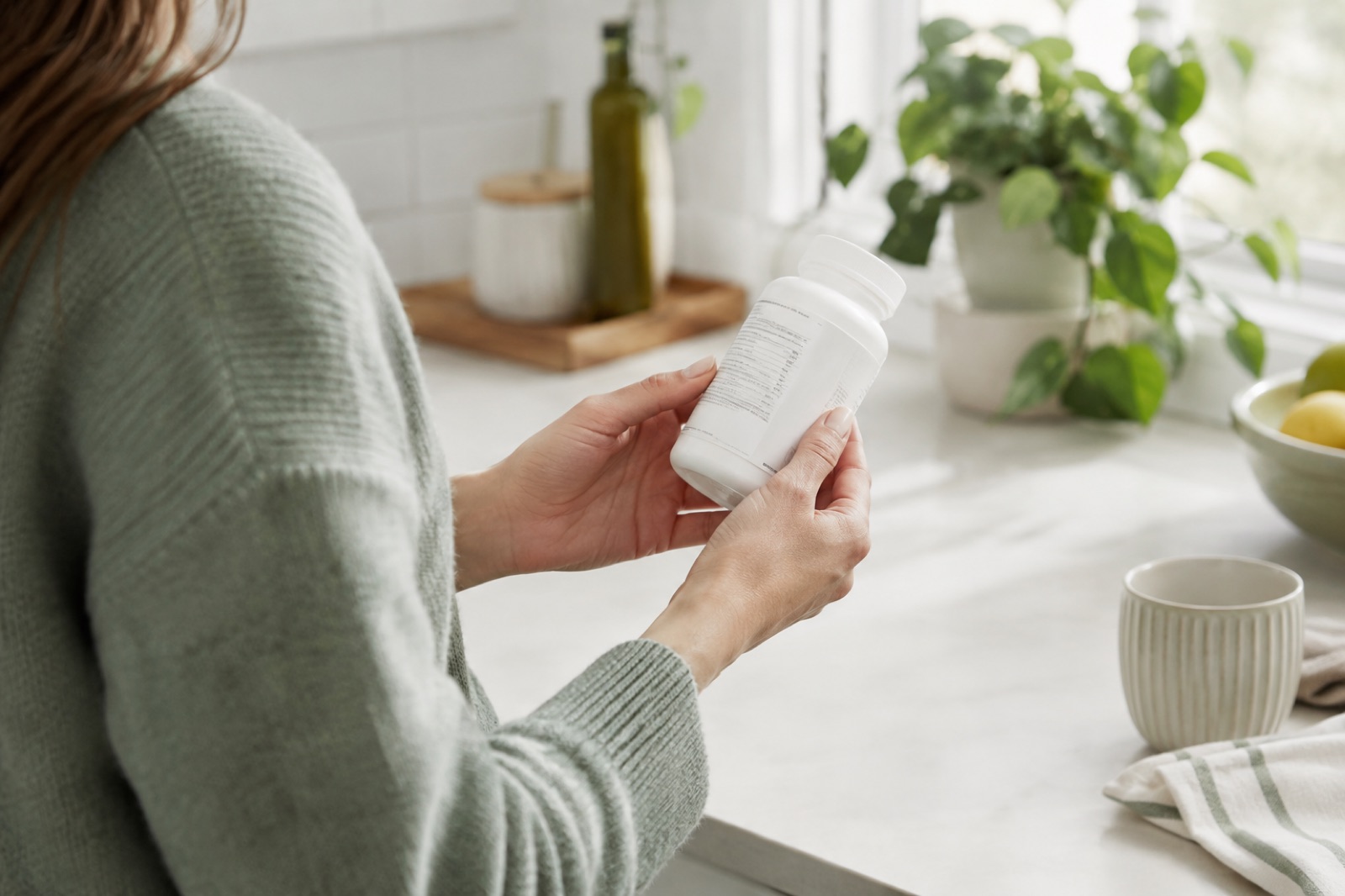
DHEA is not automatically safe for women. Over-the-counter oral DHEA supplements should not be self-started because long-term safety is unknown, benefits are limited, and DHEA can increase testosterone and estrogen activity. A prescription vaginal DHEA product called prasterone is a different treatment. It has a specific menopause indication and should be used under medical supervision.
Reviewed:
DHEA Safety at a Glance
| DHEA type | Main use | Safety conclusion |
|---|---|---|
| Oral DHEA supplement | Anti-aging, energy, libido, exercise, menopause symptoms | Not recommended for routine self-treatment. Long-term safety is unknown. |
| Vaginal prasterone | Moderate to severe painful sex caused by menopause-related vaginal changes | May be appropriate for selected postmenopausal women when prescribed and monitored. |
| Compounded DHEA cream, capsule or pellet | Customized hormone treatment | Use caution. Potency, absorption and safety may be less predictable than with an FDA-approved product. |
Why Can DHEA Affect Women Differently?
DHEA can affect women differently because the body converts it into testosterone, estrogen and related hormones. DHEA, or dehydroepiandrosterone, is produced by the adrenal glands. It is a hormone, not a simple vitamin.
In women, oral DHEA has been associated with higher testosterone levels. Possible effects include:
- Acne and oily skin
- Increased facial or body hair
- Scalp hair loss
- Irregular menstrual bleeding
- Voice deepening
- Mood changes, irritability or mania in susceptible people
Some effects may continue while hormone levels remain elevated.
Is Oral DHEA Safe for Menopause Symptoms?
Oral DHEA is not a well-established treatment for hot flashes, vaginal dryness, low libido or general aging. The National Center for Complementary and Integrative Health says it is uncertain whether DHEA improves menopause symptoms. The long-term safety of DHEA supplements is also unknown. Some evidence raises concern about possible liver harm, although the available evidence is limited.
DHEA supplements are sold without the same premarket approval process used for prescription medicines. The amount of DHEA and the quality of the product may vary. If you want to look at how one of these products is presented before raising it with a clinician, this is a mainstream DHEA supplement sold on Amazon, with the dose and Supplement Facts panel on the page.
For most women, oral DHEA is not a first-line option for menopause symptoms, low energy, anti-aging or exercise performance.
Is Vaginal DHEA Safer?
Prescription vaginal prasterone is a different treatment from oral DHEA and may be appropriate for some postmenopausal women with painful sex caused by menopause-related vaginal changes. In the United States, INTRAROSA is a 6.5 mg vaginal insert approved for moderate to severe dyspareunia linked to vulvar and vaginal atrophy. The usual dose is one insert at bedtime each day.
Vaginal prasterone acts locally, but the body still converts it into estrogen and other hormones. Vaginal discharge was the most common adverse reaction in placebo-controlled trials. Abnormal Pap smear findings were also reported during a longer open-label trial.
Seek medical evaluation before using vaginal prasterone if you have:
- Undiagnosed or recurring postmenopausal genital bleeding
- Current or previous breast cancer
- A condition for which a clinician has advised avoiding estrogen-related treatment
The FDA-approved label states that prasterone is converted into estrogen. The product has not been studied in women with a history of breast cancer.
Who Should Avoid Oral DHEA Unless a Clinician Recommends It?
People with certain cancers, hormone-related conditions, liver or cardiovascular disease, mood disorders or unexplained bleeding should speak with a healthcare professional before using oral DHEA. This also applies during pregnancy, when planning a pregnancy and while breastfeeding.
Use particular caution if you have or have had:
- Breast, ovarian or other hormone-sensitive cancer
- Liver disease
- High cholesterol or ischemic heart disease
- Polycystic ovary syndrome or symptoms of excess androgens
- Bipolar disorder, mania or another mood disorder
- Unexplained vaginal bleeding
- Pregnancy, plans for pregnancy or breastfeeding
Mayo Clinic advises against DHEA in people with hormone-sensitive cancer. It also warns that DHEA may lower HDL cholesterol, worsen some mood disorders and interact with estrogen, testosterone, certain antidepressants and other medicines.
If you take tamoxifen, do not start DHEA without speaking with your oncologist. Memorial Sloan Kettering Cancer Center notes a potential concern that DHEA may contribute to tamoxifen resistance.
Does DHEA Improve Libido or Vaginal Dryness?
The answer depends on the formulation and the cause of the symptoms.
- Oral DHEA: Evidence does not reliably show that it improves overall sexual function or general menopause symptoms.
- Vaginal prasterone: Prescription vaginal DHEA can improve painful sex associated with menopause-related vaginal atrophy.
- Low libido caused by another condition: DHEA may not address medication side effects, relationship factors, depression, thyroid disease, anemia, vaginal pain or sleep problems.
A low DHEA-S blood test does not automatically mean that DHEA supplementation is appropriate. The result needs to be interpreted alongside symptoms, age, medical history and other hormone tests.
What Should You Do Before Taking DHEA?
- Identify the product. Confirm whether it is an oral supplement, topical product, compounded preparation or prescription vaginal prasterone.
- Explain your treatment goal. Treatment for painful sex is different from treatment for fatigue, low libido, hot flashes or an abnormal blood test.
- Review your cancer and cardiovascular history.
- List every medicine and supplement you take. This matters especially if you use estrogen, testosterone, tamoxifen, antidepressants or sedatives.
- Do not increase the dose because a product is labeled "natural." DHEA is a hormone, not a harmless nutritional supplement.
- Stop and contact a clinician if you develop facial hair, severe acne, voice changes, irregular bleeding, marked mood changes, palpitations or other unexpected symptoms.
Bottom Line
If you are considering oral DHEA for general wellness, energy, aging, exercise or menopause symptoms, discuss the risks and alternatives with a clinician before using it. A prescription vaginal prasterone product may be suitable for some postmenopausal women with painful sex, but bleeding, breast cancer history and other medical conditions require review first. If you have already been comparing DHEA capsule options, take the exact product and dose to that appointment so they can be reviewed alongside your medical history.