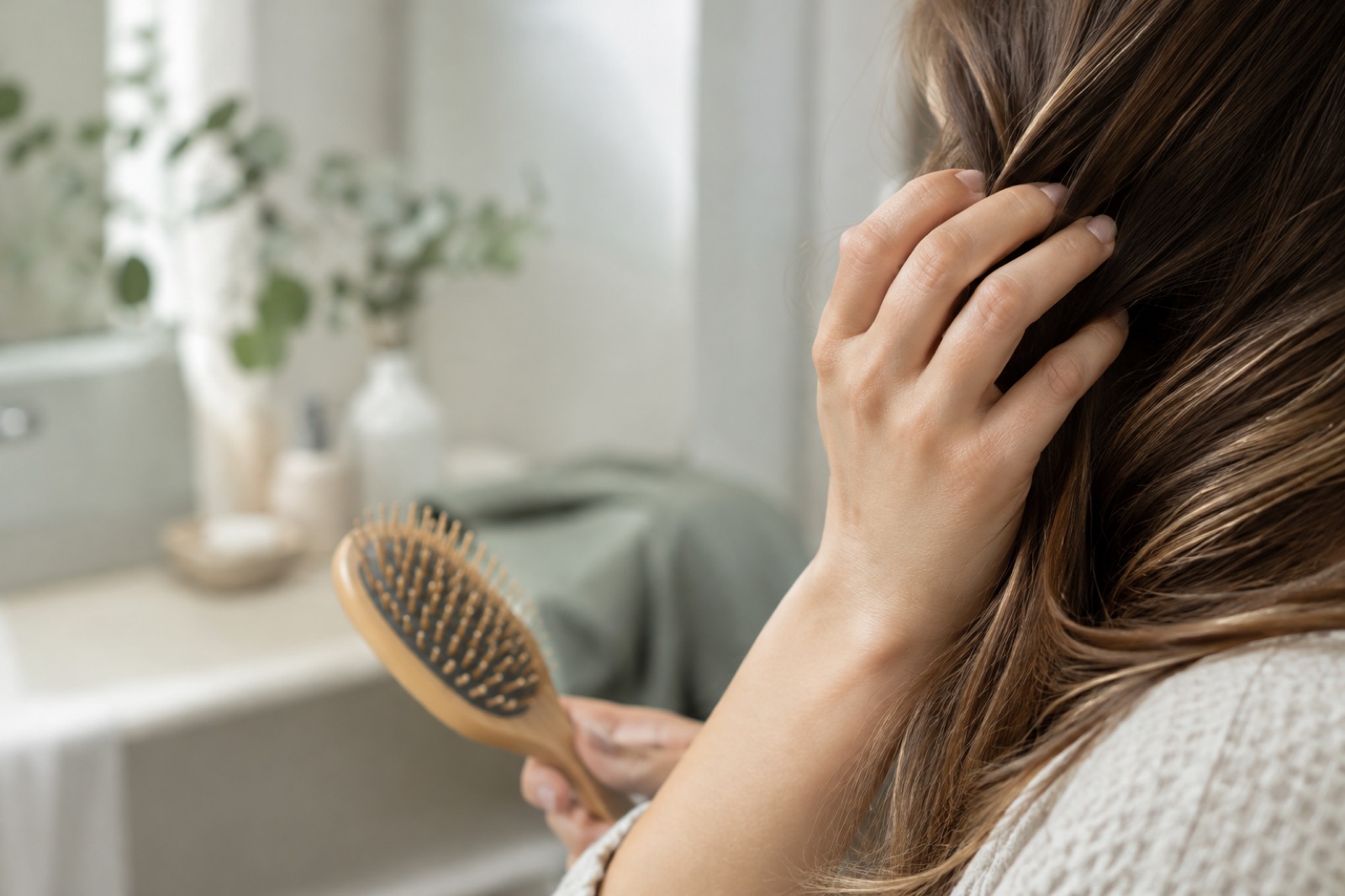
DHEA-related hair loss is often reversible when excess DHEA or a DHEA supplement is the main cause. The outcome usually falls into 2 broad patterns: temporary shedding that settles after the trigger is addressed, or pattern hair loss that DHEA has brought to attention. Pattern hair loss can continue after DHEA levels return to normal.
| Question | Short answer |
|---|---|
| Can DHEA cause hair loss? | Yes. Hair loss is a reported side effect of DHEA products, and increased androgen activity can affect susceptible scalp follicles. |
| Will hair grow back after stopping DHEA? | It may, especially when the loss is recent and linked to the supplement or temporary hormone excess. |
| Is regrowth guaranteed? | No. DHEA can trigger or uncover genetic pattern hair loss, which often needs ongoing treatment. |
| What should you do? | Review DHEA with the prescribing clinician and see a dermatologist if shedding continues. |
How Can DHEA Cause Hair Loss?
DHEA can contribute to hair loss by increasing androgen activity. DHEA, or dehydroepiandrosterone, is an adrenal hormone that can be converted into testosterone, estrogen and other steroid hormones.
In susceptible scalp follicles, increased androgen activity can shorten the growth phase and gradually miniaturize the follicles. DHEA sulfate can also be converted within hair follicles into dihydrotestosterone, or DHT. DHT is associated with androgenetic alopecia, also called pattern hair loss.
DHEA supplements list hair loss as a possible adverse effect. Clinical reviews have also reported androgen-related effects such as acne, unwanted facial hair and hair loss, particularly in women.
When Is DHEA Hair Loss More Likely to Grow Back?
Regrowth is more likely when:
- Hair shedding began soon after starting or increasing DHEA.
- The loss is diffuse rather than concentrated at the hairline or crown.
- You also developed oily skin, acne, increased facial hair or menstrual changes.
- You do not have a strong family history of early pattern hair loss.
- The hair follicles have not been significantly miniaturized.
These signs do not prove that DHEA caused the shedding, but the timing and pattern can help a clinician assess the likely cause.
Some reviews describe DHEA-related androgenic side effects as reversible after the hormonal trigger is removed. Direct evidence showing how often scalp hair fully regrows after DHEA-related hair loss is limited. Recovery also takes time because new hairs must re-enter the growth cycle.
Do not stop prescribed DHEA without speaking with the clinician who recommended it. The next step depends on why you take DHEA, your dose, your blood test results and whether the treatment is medically necessary.
When Might DHEA Hair Loss Be Only Partly Reversible?
DHEA may trigger or uncover androgenetic alopecia, also called male-pattern or female-pattern hair loss. This condition causes genetically sensitive follicles to shrink over time.
Typical signs include:
- A receding hairline or thinning at the crown.
- A widening part.
- Gradual reduction in hair diameter.
- A family history of similar hair loss.
- Slow progression over many months or years.
Stopping DHEA may remove one factor contributing to the loss, but it may not reverse follicle miniaturization that has already developed. The American Academy of Dermatology states that treatment for hereditary hair loss can reduce further loss and sometimes produce regrowth. Results are generally better when treatment starts early.
Topical minoxidil is one commonly used treatment. It can reduce hair loss and stimulate some regrowth, but the benefits usually require consistent use and may be lost after treatment stops. Other options, including prescription medicines or procedures, depend on sex, age, pregnancy potential, medical history and the confirmed cause of hair loss.
What Tests Can Identify DHEA-Related Hair Loss?
A clinician may consider a DHEA sulfate blood test and other hormone tests when hair loss occurs with signs of androgen excess. High DHEAS can be associated with acne, irregular periods, excess facial or body hair and hair loss at the top of the scalp.
The result must be interpreted according to age, sex, symptoms, medications and the laboratory's reference range.
A dermatologist may also examine the scalp for:
- Androgenetic alopecia.
- Telogen effluvium, which causes temporary diffuse shedding.
- Alopecia areata.
- Traction or scarring hair loss.
- Hair breakage rather than true shedding.
Hair loss can have more than one cause. The American Academy of Dermatology recommends identifying the cause before choosing treatment. A clinician may use blood tests or a scalp biopsy when a hormone imbalance, disease or infection is suspected.
When Should You Seek Medical Evaluation Promptly?
Seek medical assessment promptly if hair loss occurs with:
- Rapid progression.
- Severe acne or new facial hair growth.
- Irregular or absent periods.
- Deepening of the voice.
- Increased muscle mass or other signs of virilization.
- A markedly high DHEAS result.
These symptoms can point to substantial androgen excess. High DHEAS may sometimes be linked to conditions involving the adrenal glands, ovaries or inherited hormone disorders. Treatment should address the cause, not only the hair loss.
Bottom Line
If you use prescribed DHEA, speak with the prescribing clinician before changing the dose or stopping treatment. If you bought the product yourself instead, bring the bottle or the listing to that appointment; this is a popular DHEA capsule, and its page shows the amount per serving. If shedding continues, a dermatologist can check whether the pattern fits temporary shedding, androgenetic alopecia, another type of hair loss or more than one cause.