Last reviewed:
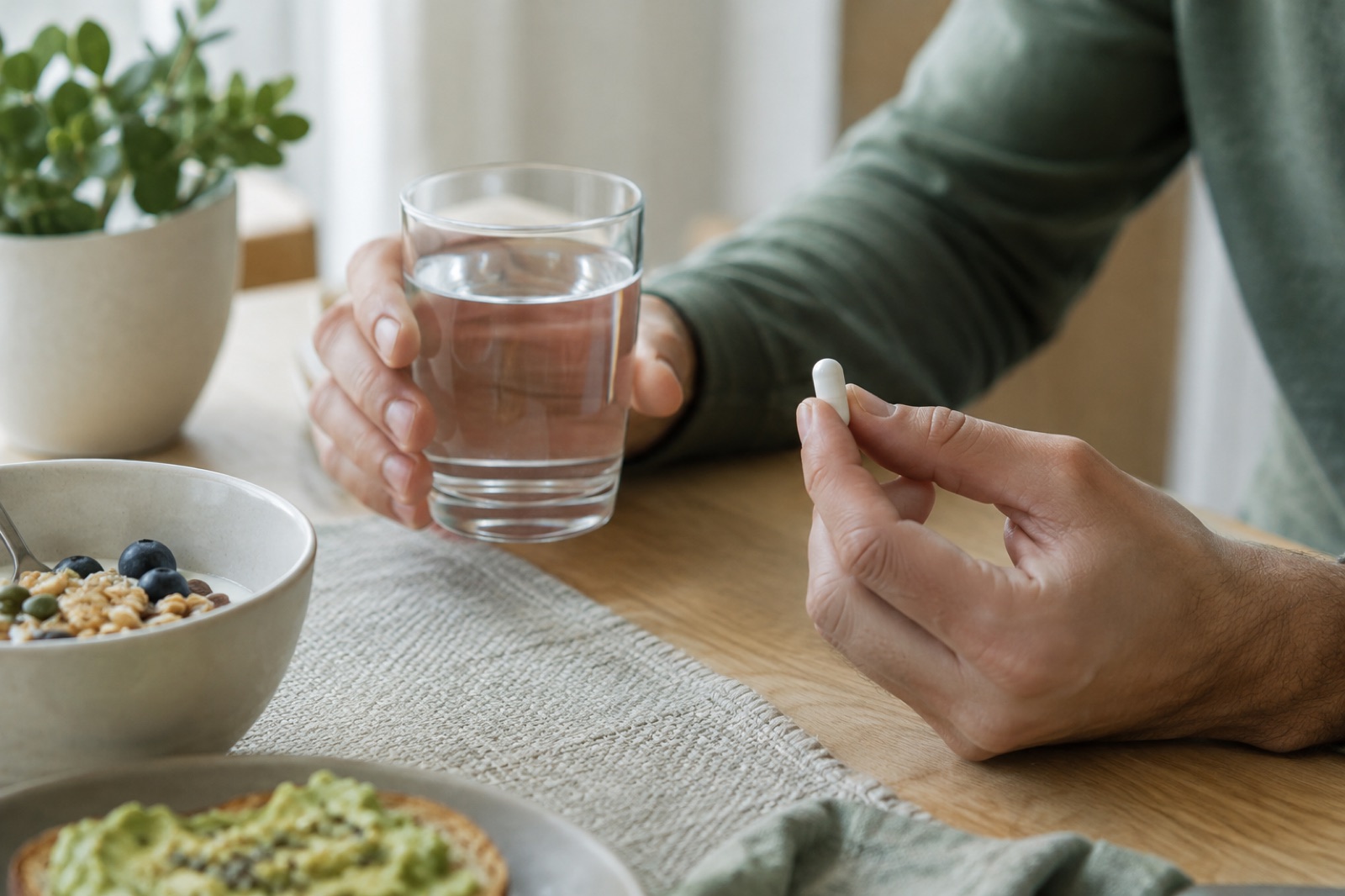
DHEA is not a reliable testosterone booster for most men. There is no established standard dose for healthy men, and research has not shown consistent benefits for testosterone, muscle mass or strength. If a healthcare professional recommends DHEA, take the exact dose on the product label or prescription, usually by mouth once daily. Commercial products commonly contain 25 mg or 50 mg per serving, but a label amount is not a medically established dose. Take DHEA with food if it upsets your stomach, and do not combine it with testosterone unless your prescriber tells you to do so. If you want to see how these products are presented before that conversation, this is a DHEA capsule listing, with the serving size and ingredient list on the page.
DHEA for Men at a Glance
| Question | Practical answer |
|---|---|
| Should healthy men self-start DHEA? | Generally no. The benefits are uncertain, and DHEA can affect several hormones. |
| Is DHEA a reliable testosterone booster? | No. Studies in men have not consistently shown higher testosterone. |
| How is DHEA taken? | By mouth as a capsule or tablet, following the label or a clinician's instructions. |
| Should it be taken with food? | It can be taken with or without food. Use food if it causes stomach upset. |
| Is there a standard male dose? | No standard dose exists for general use in healthy men. |
| Can it be taken with testosterone? | Only if a clinician is supervising both treatments. |
| What should be checked? | Your symptoms, medical history, medications and, when appropriate, DHEA-S and testosterone blood tests. |
What Is DHEA?
DHEA, or dehydroepiandrosterone, is a steroid hormone produced mainly by the adrenal glands. The body can convert DHEA into other hormones, including testosterone, androstenedione and estrogen.
DHEA levels usually decline with age. That change alone does not show that taking DHEA will improve health, energy or physical performance.
DHEA supplements are sold as tablets, capsules, powders, creams and gels. In the United States, supplement products are not evaluated by the FDA for effectiveness before sale in the same way as approved medicines. Product strength and purity can also vary.
How Should a Man Take DHEA Safely?
If a clinician approves DHEA, use the treatment plan they provide.
- Confirm the reason for treatment. Do not use DHEA simply because of fatigue, low libido, erectile problems or age-related changes without first looking for the cause.
- Use one DHEA product at a time. Avoid combining it with "testosterone boosters," prohormones or other hormone products.
- Follow the exact dose. Do not increase the amount because you do not notice an immediate effect.
- Take it by mouth as directed. DHEA tablets and capsules can generally be taken with or without food. Food may reduce stomach upset.
- Ask about morning dosing. When DHEA is used as hormone replacement, a clinician may check a morning DHEA-S level before the daily dose. Do not change the timing before a blood test unless your clinician tells you to.
- Do not double a missed dose. Take the next dose as directed rather than taking extra DHEA.
- Arrange follow-up. Continued use should depend on symptoms, measurable benefit and appropriate monitoring. A higher dose is not automatically better.
What Is the Right DHEA Dose for Men?
There is no universally recommended DHEA dose for healthy men. Some commercial products contain 25 mg or 50 mg per serving. Those amounts reflect product labels, not an established treatment dose. For a sense of what a DHEA supplement label looks like, this is one such product page, which states the amount per capsule.
Endocrine Society materials list an initial DHEA replacement dose of 25 to 50 mg. However, the related clinical guideline recommends a DHEA trial specifically for women with primary adrenal insufficiency who have persistent low libido, depressive symptoms or low energy despite optimized corticosteroid treatment. That guidance is not a general dosing recommendation for healthy men.
Clinical studies in men have used doses such as 50 mg, 100 mg and 150 mg per day. These were research doses, not instructions for self-treatment. In studies of healthy men, DHEA did not reliably increase testosterone, strength or lean body mass compared with placebo.
Does DHEA Increase Testosterone in Men?
Usually, it does not increase testosterone reliably. Although the body can convert DHEA into testosterone-related hormones, taking DHEA does not necessarily raise blood testosterone to a useful level.
The National Institutes of Health Office of Dietary Supplements reports that limited studies in men found no meaningful improvement in muscle size, strength, aerobic capacity or testosterone levels. In one controlled study, 50 mg of DHEA temporarily increased androstenedione but did not increase testosterone or improve training results.
If you have symptoms of low testosterone, medical testing is a better next step than starting DHEA automatically. A clinician may review your symptoms and order properly timed testosterone testing, along with other tests when needed. DHEA does not replace an evaluation or prescribed testosterone treatment.
Who Should Avoid DHEA or Speak With a Clinician First?
Speak with a healthcare professional before using DHEA if you have:
- Prostate cancer, breast cancer or another hormone-sensitive cancer
- An enlarged prostate or significant urinary symptoms
- Liver disease
- Heart disease, high blood pressure or low HDL cholesterol
- Diabetes
- A mood disorder, bipolar disorder or a history of mania
- A seizure disorder
- A fertility goal
- A diagnosed adrenal or pituitary disorder
- Current treatment with testosterone or another hormone product
Mayo Clinic notes that DHEA may affect androgen activity, lower HDL cholesterol and worsen some mood conditions. Long-term or high-dose use may also be a concern for people with hormone-sensitive cancers.
DHEA Side Effects in Men
Potential side effects include:
- Acne or oily skin
- Hair loss or increased body hair
- Irritability, aggression or mood swings
- Headache or insomnia
- Breast tenderness or breast enlargement
- Changes in libido
- Changes in cholesterol
- Possible liver problems
Stop taking DHEA and seek medical advice if you develop severe mood changes, a rapid heartbeat, significant breast enlargement, jaundice, dark urine, unusual weakness or right-sided upper abdominal pain. These symptoms may signal a serious adverse effect or liver problem.
Can DHEA Interact With Medications?
Yes. DHEA may interact with testosterone, estrogen and other hormone treatments. It may also interact with some antidepressants, diabetes medicines, anticoagulants, antiplatelet medicines, benzodiazepines and certain pain relievers.
Give your doctor or pharmacist a complete list of prescription medicines, over-the-counter products and supplements before starting DHEA.
The Safest Practical Answer
Treat DHEA as a hormone, not as a general supplement for energy, libido, muscle gain or testosterone.
For most men, the safer approach is to investigate the reason for those symptoms before using DHEA. Review your medical history and medications with a clinician, and arrange DHEA-S or testosterone testing when it is medically appropriate. If DHEA is approved, follow the recommended dose, avoid combining it with other hormone products and attend follow-up appointments.
DHEA may have a role in selected endocrine conditions, but routine self-treatment is not supported by strong evidence.