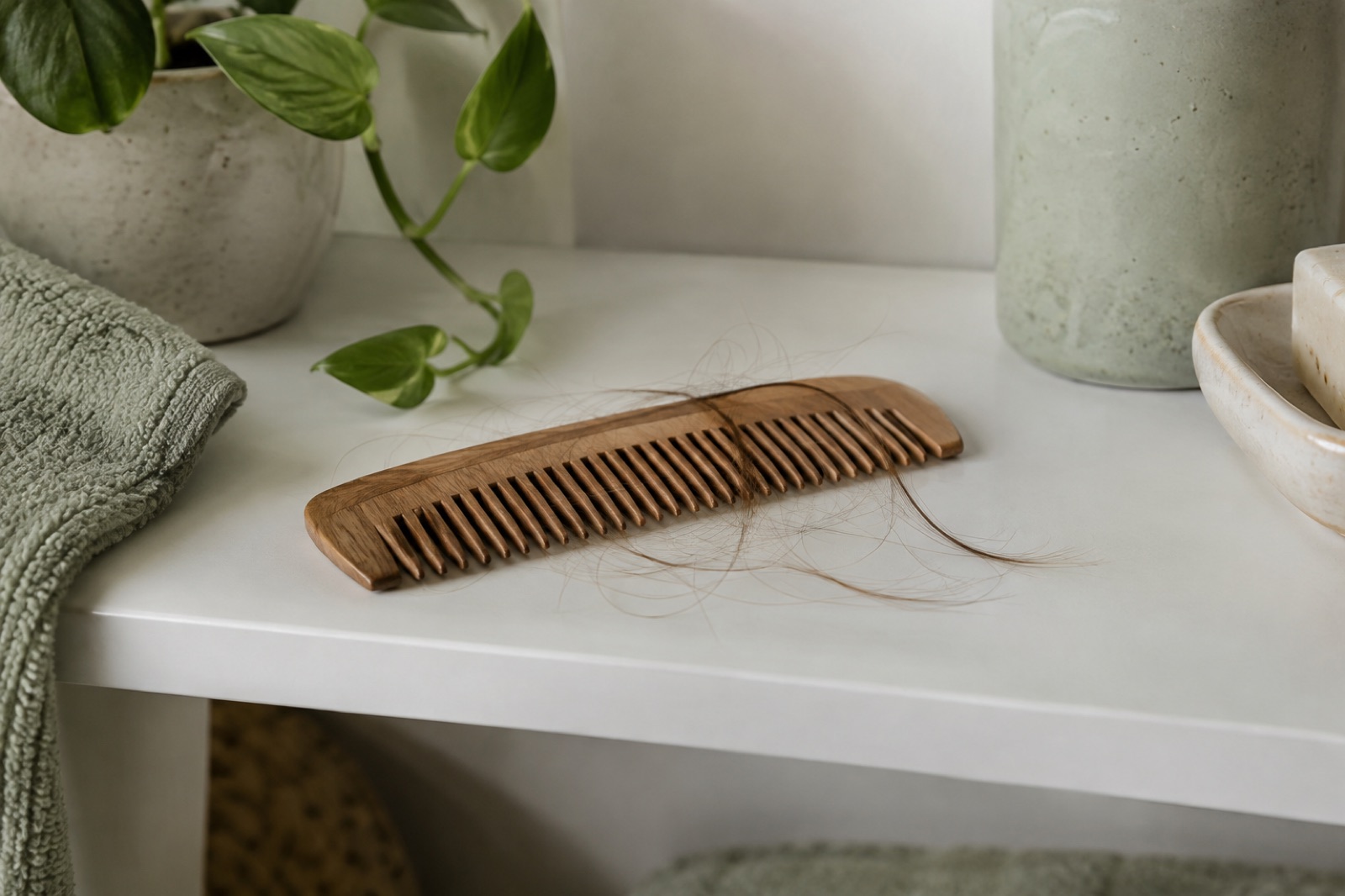
Yes, DHEA can contribute to hair loss, but it is not a common or inevitable side effect. DHEA is converted in the body into hormones such as testosterone and estrogen. In people who are genetically sensitive to androgens, increased androgen activity can worsen pattern hair loss or cause scalp thinning. If you want to check the dose you are taking, this is a DHEA supplement sold on Amazon, with the label and ingredient list on the page.
| Question | Short answer |
|---|---|
| Can DHEA cause hair loss? | Yes, it is possible. |
| Is hair loss guaranteed? | No. Many people do not develop it. |
| Who may be more vulnerable? | People with genetic pattern baldness or signs of excess androgen activity. |
| Can high DHEA-S cause hair loss without supplements? | Yes, especially in women with androgen excess. |
| What should you do? | Discuss the supplement and symptoms with a healthcare professional or dermatologist. |
How DHEA May Contribute to Hair Loss
DHEA is a steroid hormone produced by the adrenal glands. The body can convert DHEA into testosterone and other androgen hormones. These hormones affect scalp follicles differently, depending on a person's genetics.
In androgenetic alopecia, also called male or female pattern hair loss, genetically sensitive follicles gradually become smaller under the influence of androgen activity. Dihydrotestosterone, or DHT, is one hormone involved in this process. DHEA may increase the supply of hormones that contribute to the process, but it has not been shown to cause hair loss in everyone who takes it.
Is DHEA-Related Hair Loss More Likely in Women?
It may be, especially when androgen levels are high. Increased androgen activity in women has been linked with acne, increased facial or body hair, irregular menstrual cycles, and thinning hair on the top of the scalp. High DHEA-S can be associated with polycystic ovary syndrome and, less often, adrenal or ovarian disorders.
Women taking DHEA may also develop acne or increased facial hair. One clinical trial found androgen-related effects on the skin and body hair in women who received DHEA. The trial did not establish that DHEA directly caused scalp hair loss.
How to Tell Whether DHEA May Be Involved
DHEA is more likely to be a contributing factor when:
- Hair shedding began after you started or increased the dose.
- Thinning is concentrated around the crown, part line, temples, or front of the scalp.
- You also developed acne, oily skin, facial hair, or menstrual changes.
- You have a personal or family history of male or female pattern hair loss.
- Blood tests show elevated DHEA-S, testosterone, or other androgen levels.
The timing can offer a clue, but it does not prove that DHEA is the cause. Hair loss can also result from thyroid problems, iron deficiency, illness, major stress, weight loss, medications, autoimmune disease, or genetic pattern hair loss.
What Should You Do If You Notice Hair Loss While Taking DHEA?
Start by contacting the clinician who recommended DHEA. Do not change prescribed hormone treatment without medical advice.
- Review the product and dose. Over-the-counter DHEA products can vary, and the long-term safety of supplementation remains uncertain.
- Ask whether testing is appropriate. Depending on your symptoms, a clinician may consider DHEA-S, testosterone, thyroid, iron, or other tests.
- See a dermatologist if thinning continues. A dermatologist can distinguish pattern hair loss from excessive shedding and look for other treatable causes.
Seek prompt medical evaluation if hair loss occurs with rapid facial hair growth, a deepening voice, severe acne, markedly irregular periods, or sudden, extensive scalp thinning. These symptoms can indicate substantial androgen excess rather than a straightforward supplement side effect.
Bottom Line
If shedding started after you began taking DHEA, have the supplement, dose, hormone levels, and other possible causes reviewed by a healthcare professional. DHEA may contribute to hair loss in people who are sensitive to androgen activity, but hair loss is not an expected result for everyone who uses it.